.svg)

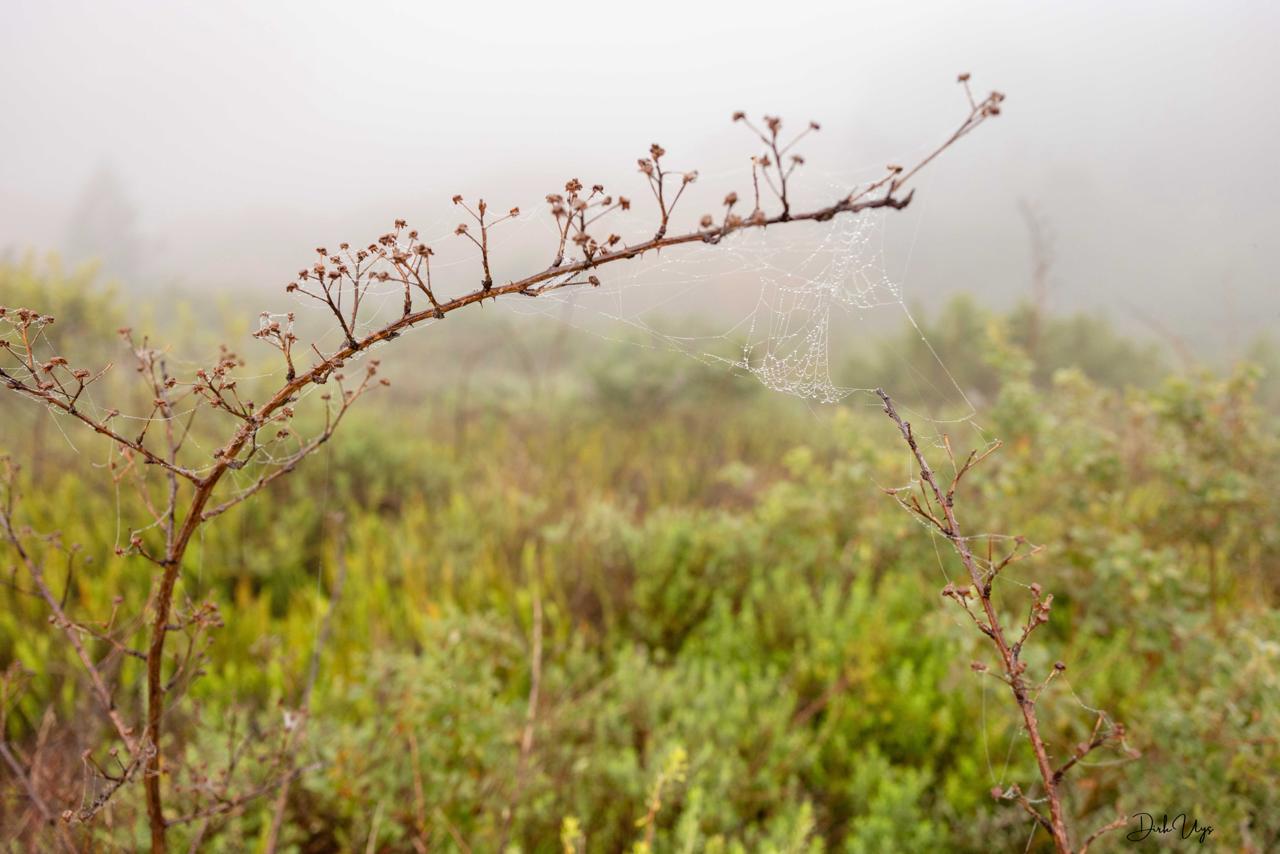
World Wildlife Day (WWD) is celebrated every year on 3 March to honour wild plants and animals and recognise their importance to people and the planet. The 2026 theme, Medicinal and Aromatic Plants, highlights the vital role that wild plants play in human health, cultural heritage, and livelihoods. Few plants illustrate this connection better than buchu, one of South Africa’s most iconic aromatic fynbos species. But did you know we have our own buchu species growing in the mountains around Swellendam?
What is buchu?
The genus Agathosma (family Rutaceae) comprises roughly 150 species indigenous to southern Africa, three of which, endemic to the montane regions of the Western Cape, are commercially important:
Round-leaf buchu (Agathosma betulina), locally known as bergboegoe or rondeblaarboegoe, is restricted to the mountain slopes of Nieuwoudtville, Piketberg, Tulbagh, and the Cederberg. This small shrub seldom exceeds 1 metre in height and prefers red sandy soils on rocky sandstone slopes at higher altitudes.
Oval-leaf buchu (Agathosma crenulata), or ovaalblaarboegoe, is a single-stemmed shrub that can reach up to 2.5 metres. It grows in mid-slopes and valleys from Tulbagh to Bettys Bay, including areas around Stellenbosch, Paarl, Wellington, Ceres, Wolseley, Worcester, and Caledon.
Hybridisation between round-leaf and oval-leaf buchu has occurred where both species have been cultivated outside their natural distribution ranges.
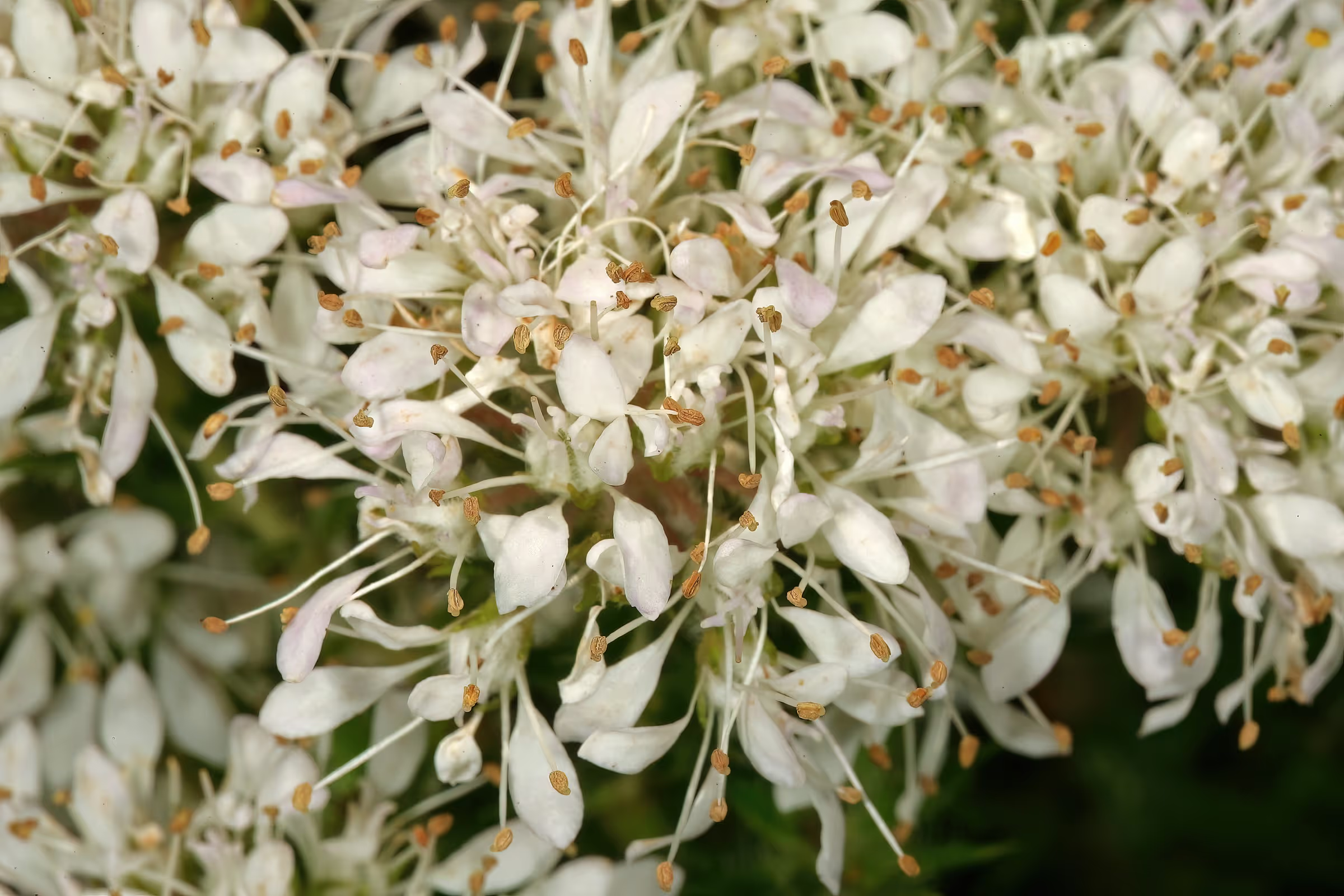
Narrow-leaf buchu (Agathosma serratifolia), known locally as langblaarboegoe or kloofboegoe, is the species that grows in the mountains around Swellendam and Riversdale. This shrub can reach up to 3 metres and thrives in more sheltered montane areas, often near running water. Its leaves are long and narrow, distinguishing it from the rounded leaves of A. betulina and the oval leaves of A. crenulata.
.avif)
A Medicinal Plant with Deep Cultural Roots
Buchu has been valued for centuries by Khoisan communities, who recognised its medicinal and aromatic properties long before it became commercially sought after. Traditionally, the leaves were used to treat infections, inflammation, and kidney and urinary conditions. Today, buchu oil is prized for its distinctive fragrance and potential therapeutic benefits. Although it has a long history of traditional use, further scientific research and clinical trials are needed to better understand and validate its medicinal properties. More than a hundred chemical compounds have been identified in buchu leaves, the most important being diosphenol, isomenthone, and pulegone.
Diosphenol and isomenthone are major constituents of buchu oil and are believed to contribute to its biological activity and traditional medicinal uses. In contrast, pulegone, a colourless oil with a pleasant aroma reminiscent of catnip, peppermint, and camphor is approved for use in the food industry but can be toxic to the liver in high doses.
Chemical differences between the species have a major effect on cultivation and extraction: A. crenulata contains higher levels of pulegone, making it less suitable for oil production, whereas A. betulina has lower concentrations and is therefore the preferred species for commercial cultivation.
Interestingly, there is no detailed chemical profile for narrow-leaf buchu (A. serratifolia), the species growing naturally in the mountains around Swellendam. It is closely related to A. crenulata, and earlier studies suggest it may also contain relatively high levels of pulegone, although its other chemical components remain largely unstudied. Furthermore, in A. betulina, researchers have identified distinct “chemotypes”, variations in compounds like isomenthone and diosphenol that are influenced by genetics, location, or both. This raises the possibility that different populations of A. serratifolia in the Swellendam mountains could have unique and valuable chemical profiles, making the species particularly interesting for future research and cultivation.
A challenging plant to cultivate
Buchu, like many fynbos species, is notoriously difficult to cultivate.
It takes roughly one ton of fresh leaves to produce a single liter of distilled oil. The plants are highly sensitive to soil acidity, moisture levels, and attempts to cultivate it elsewhere often fail due to fungal susceptibility and poor adaptation. Even when successfully grown, cultivated plants often produce lower concentrations of aromatic and medicinal compounds compared to their wild counterparts. Germination from seed is also a major challenge for the main species like A. betulina and A. crenulata, with low success rates, while cuttings frequently fail to root.
Narrow-leaf buchu (A. serratifolia) has a different ecological strategy that could be an advantage for cultivation. Unlike other buchu species that survive fire by resprouting, A. serratifolia appears to be an obligate reseeding species that is killed by fire, allowing populations to recover naturally after burns. It also grows well at lower altitudes and in heavier soils, suggesting it may be more adaptable than other species for cultivation. There is even a historical record of it being grown as a hedge in Swellendam!
Conservation protects nature’s pharmacy
Buchu is a reminder that the fynbos is more than just beautiful, it is a living pharmacy. The traditional knowledge surrounding buchu belongs to the Khoisan people and forms an integral part of South Africa’s cultural heritage. This knowledge should be acknowledged, attributed, and respected whenever the plant is discussed, studied, or used. Importantly, research into buchu also highlights broader social and legal issues: national access and benefit-sharing legislation has often failed to ensure that rural communities involved in the wild-harvest trade receive fair commercial benefits, with profits disproportionately accruing to wealthier farmers.
Despite these challenges, producing buchu oil remains resource-intensive, highlighting the importance of careful management and conservation of wild populations. Protecting local habitats ensures not only the survival of these remarkable plants, but also the preservation of their chemical diversity.
Conserving wild populations of buchu is therefore not just an ecological priority, it is also a matter of cultural respect and social equity. On this World Wildlife Day, buchu serves as a symbol of the connection between biodiversity, traditional knowledge, and human wellbeing. Protecting these plants ensures that future generations can continue to benefit from their unique medicinal, aromatic, and cultural value.
Article by Chris Broeckhoven (SBC Committee Member)