.svg)

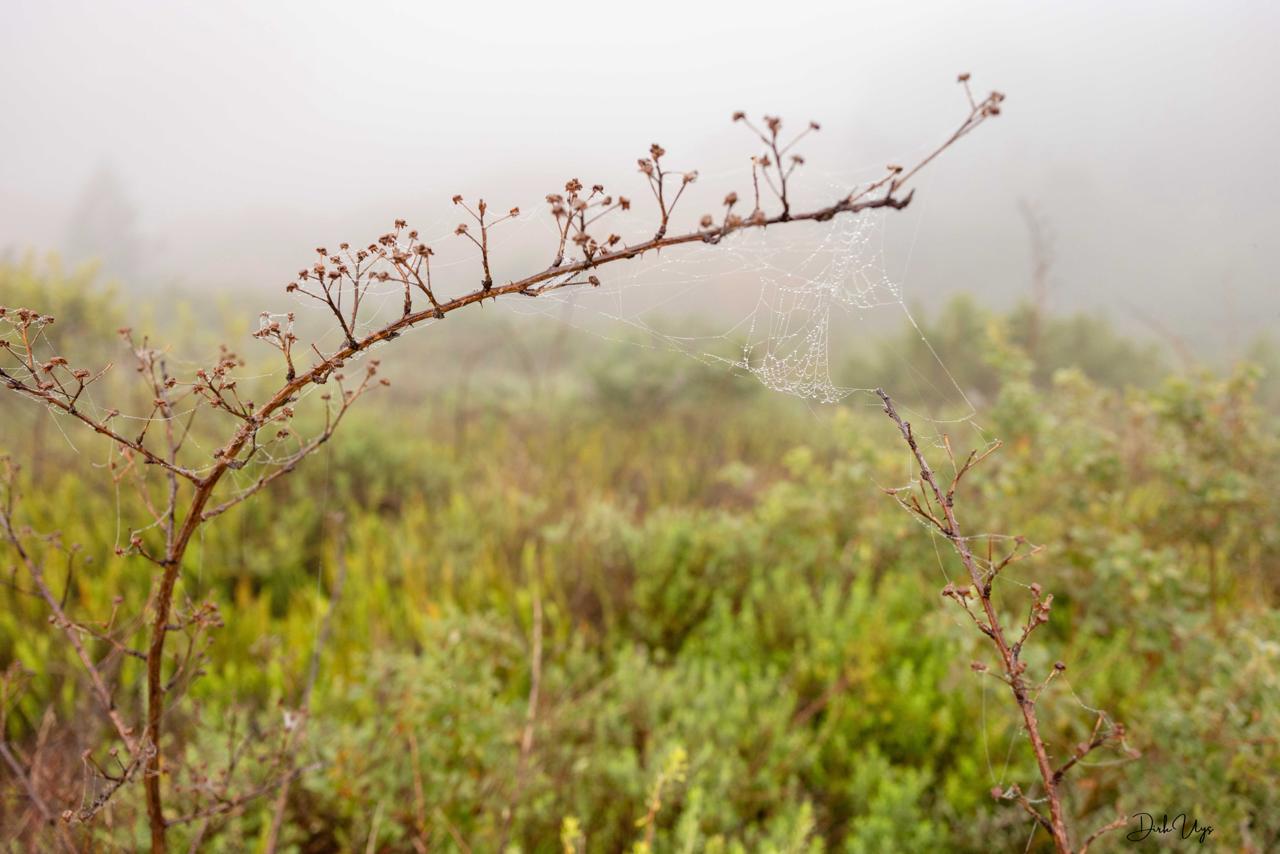
A Hidden Treasure On Our Doorstep
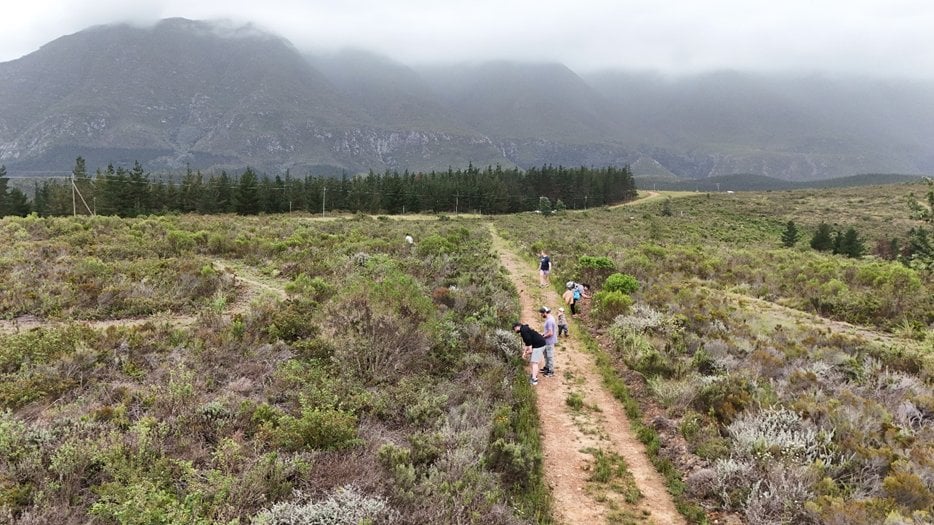
This Easter, a small group of us were brave enough to head out under overcast skies for a walk through one of Swellendam’s hidden treasures, the Swellendam Silcrete Fynbos. What began as a casual walk quickly turned into something far more meaningful: a shared exploration of an endangered ecosystem that persists quietly on the edge of town.
What Is Swellendam Silcrete Fynbos?
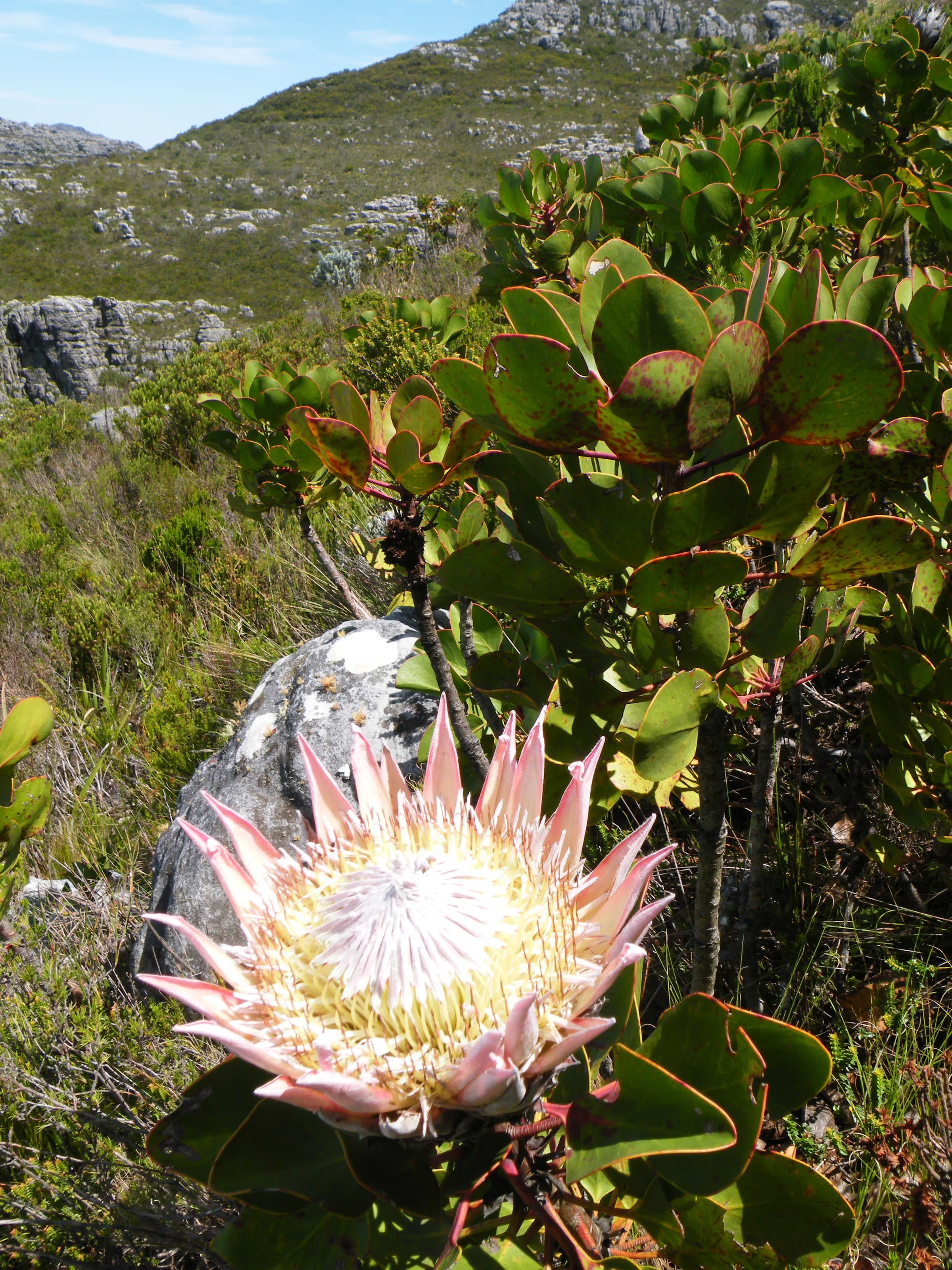
Swellendam Silcrete Fynbos is a unique vegetation type within the Cape Floristic Region, forming a transition between fynbos and renosterveld. It occurs in a narrow strip along the foot of the Langeberg from Swellendam to Riversdale, where silcrete-derived soils create unusual conditions that support a distinctive mix of plant species. Although it is ecologically important and contains many unique and locally restricted species, it is highly threatened. Large areas have already been lost to agriculture and plantations, and only about 4% is formally protected. Even within conservation areas such as Bontebok National Park, grazing and fire management can shift its structure toward more grass-dominated vegetation, reducing plant diversity.
What Is The Role Of The SBC?
Through the Adopt-a-Spot Programme (2026–2028), the SBC has taken on stewardship of an ~11 ha silcrete remnant located between the Swellendam Golf Club, Marloth Nature Reserve, and Masbiekerskloof. The SBC will actively manage the site through invasive alien plant clearing, biodiversity monitoring, community engagement, and support the Swellendam Cycling Club in maintaining existing tracks. The aim is not only to conserve the area, but also to make it accessible and meaningful to the broader community while contributing to local eco-tourism. Our organised walk formed part of this initial phase—an opportunity to explore the site, understand its current condition, and begin engaging residents with its ecological value. Participants were encouraged to look closely at the fauna and flora, identify species, and contribute observations using iNaturalist (Figure 1). Observations from within the silcrete remnant—either georeferenced within the site or tagged with “Swellendam Silcrete Fynbos” are automatically added to a dedicated iNaturalist project (https://www.inaturalist.org/projects/swellendam-silcrete-fynbos), allowing all records from the site to be collated in a single dataset. These observations are then reviewed and identified by a community of experts. Once verified, they can reach “research grade” status, meaning they contribute to a growing, verified species inventory for the site. This marked the start of a longer-term effort to document the biodiversity of the site and build a baseline dataset that can inform future conservation actions.
%20(1).avif)
During the walk, we recorded a surprising diversity of species, including several endemic and threatened plants. Many of these species are small, seasonal, or easily overlooked, including geophytes, perennial plants with underground storage organs such as bulbs, corms, or tubers that persist below ground for much of the year and emerge only briefly to flower under specific seasonal conditions (Figure 2). Despite their inconspicuous nature, these species play a crucial role in maintaining the ecological character and functional diversity of this vegetation type. Their presence highlights the importance of conserving even small remnants like this one, particularly as similar habitats continue to decline elsewhere.
%20(1000%20x%20800%20px)%20(1000%20x%20450%20px)%20(2).avif)
Some of the rare geophyte endemics recorded on recent walks in the silcrete include the Near Threatened Oxalis pendulifolia, the Vulnerable Gladiolus engysiphon, and the more recently discovered subspecies Pelargonium dipetalum ssp. stenosiphon.
Building on this first event, the SBC, led by its chair and vice-chair, Drs. Genevieve Diedericks and Chris Broeckhoven, plan to implement more regular, seasonally structured biodiversity surveys in collaboration with Stellenbosch University. While plant diversity has already been well-documented in the silcrete, we will focus on expanding the surveys to include insects, reptiles, and small mammals. By inviting specialist taxonomists to join targeted survey periods, particularly for underrepresented groups, we hope to strengthen our species identifications and improve the completeness of the overall inventory. We invite community members, students, and volunteers to join future surveys and help us explore and document the hidden diversity of the silcrete fynbos. Looking ahead, we aim to build enough momentum to host a formal Great Southern BioBlitz event (https://www.greatsouthernbioblitz.org/) on November 27–30, 2026. This will bring together experts and the wider community to document as many species as possible over a short period, generating valuable biodiversity data while celebrating the richness of the Silcrete Fynbos. What started as a simple walk is now growing into something much bigger for this unique ecosystem on our doorstep.
Written by Chris Broeckhoven (SBC Vice-chair)