.svg)

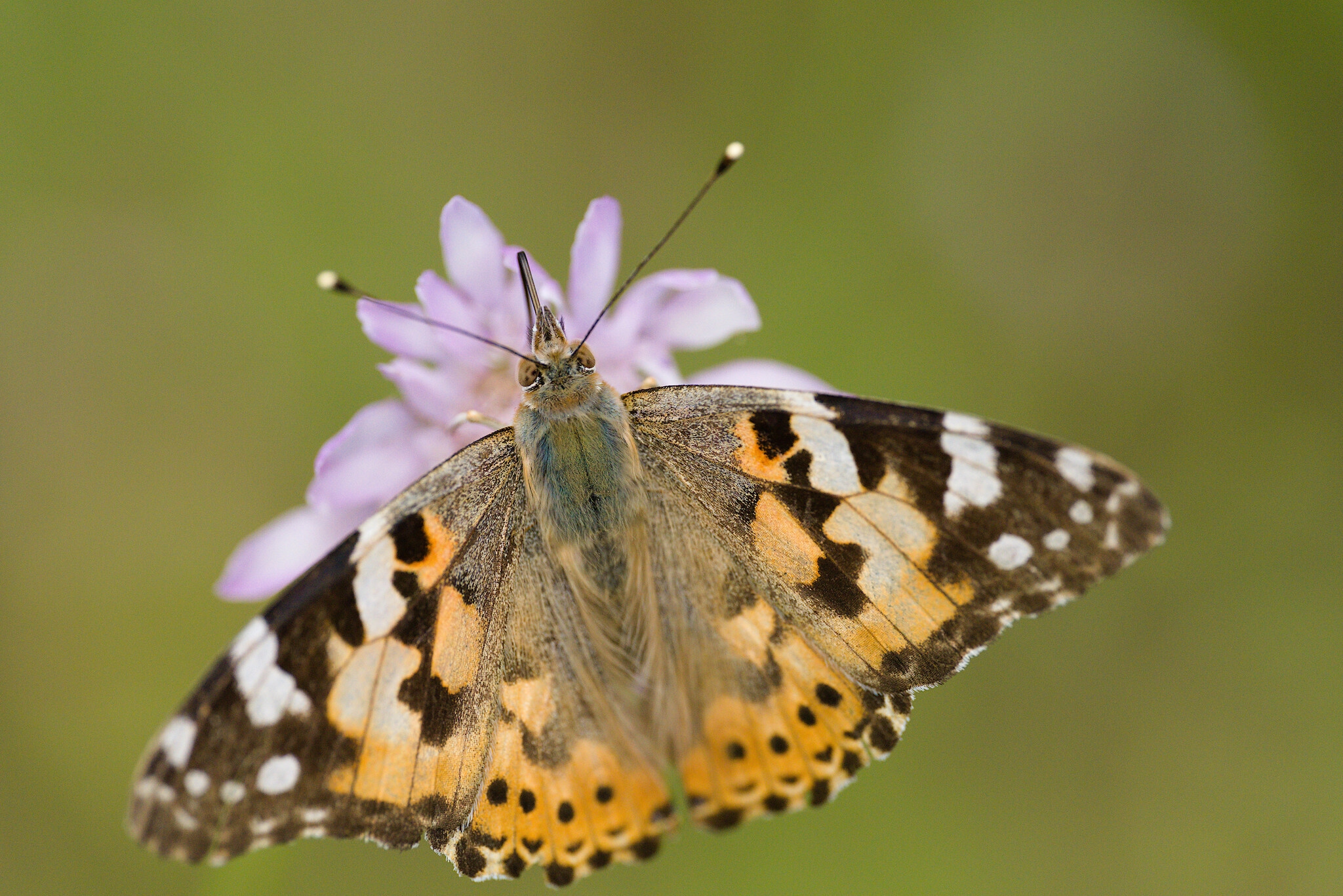
This World Pollinator Week, I hope to spark renewed interest in a familiar visitor to Swellendam’s gardens and dust tracks - the Painted Lady butterfly, Vanessa cardui.
Patterned orange, black and white, this widespread little traveller is a remarkable pollinator whose life story ties our local indigenous plants to far-flung ecosystems. Painted Ladies move through urban gardens, farmland and wild patches alike, pausing on dusty paths, sipping nectar from a generous variety of indigenous flowers and laying eggs on carefully chosen host plants. Their caterpillars mainly feed on members of the Daisy family (Asteraceae) - here that includes Cape Weed (Arctotheca calendula), several Gazania species, African Thistles (Berkheya species) and a large selection of other wild daisies. Adults visit many different blooms in a short time, maximising pollen transfer and quietly knitting plants together into a functional pollination network.

What often surprises people is how widely travelled these butterflies are. Across multiple generations they undertake long seasonal movements between Europe and sub-Saharan Africa, tracking the warmth as if following a very slow, continent-wide banquet. Individual Painted Ladies have been recorded flying distances of up to 4 000 km in a single journey - picture such a fragile creature winging its way to far-off continents like a small, determined paper kite. That astonishing endurance reminds us that local conservation choices have ripple effects far beyond our neighbourhoods.
The species, of course, faces pressures, as do many of our local creatures. Climate change alters temperature and rainfall patterns, which can reduce breeding success and mismatch life stages with the flowering times of their host plants. Extended dry spells or unusual rains can thin out local Asteraceae populations or shift their seasonality, leaving hungry larvae short of food. Agricultural intensification, invasive alien plants that outcompete indigenous species, and urban expansion all shrink and fragment suitable habitats, increasing distances between feeding and breeding sites. Chemical exposure is a clear and present danger: pesticides and herbicides used on farms or lawns can kill caterpillars outright, delay their development, reduce their ability to breed, or damage the host plants the butterflies depend on.
There are encouragingly simple and cost-effective steps communities can take that benefit Painted Ladies and a myriad of other indigenous pollinators alike. Planting small patches of locally indigenous species (particularly Asteraceae) in gardens, parks and verges gives both larvae and adults reliable food and breeding resources. Allowing so-called weeds to flourish in selected road verges - those humble Cape Weeds many people dismiss - can create continuous, pesticide-free corridors that help butterflies move safely through altered landscapes. Reducing pesticide use in farms, road verges and gardens, adopting buffer zones around farmland, and restoring connected habitat patches all increase survival and breeding opportunities. Coordinated neighbourhood efforts - a scattering of Asteraceae across many properties rather than a single large patch - can act like stepping stones, enabling Painted Ladies to refuel and reproduce as they move.
There is also much to learn from simple observation. Spend half an hour in a garden on a sunny day and you may see a Painted Lady inspecting flower after flower with its typical meticulous work ethic that makes you smile - a tiny, earnest gem of the natural world. Recording such sightings, noting host plants and flowering times, and sharing that information with local conservation groups strengthens local knowledge and helps to identify where action is most needed. Community education - workshops on planting indigenous species, talks about reducing chemical use, and school activities focused on pollinators - can build public awareness and involvement.

The Painted Lady’s extraordinary migration is a humbling lesson in connectedness: small local choices help sustain grand, globe-spanning journeys. Protecting host plants, maintaining pesticide-free margins, and creating linked habitat patches supports not only the butterflies we see in Swellendam but also the migratory miracle their species undertakes. This World Pollinator Week, may Swellendam’s Painted Lady inspire us to practise thoughtful stewardship - to let the wild flowers stand, to spare a verge, to garden with an eye to the next generation of wings - knowing that modest actions here contribute to life’s far-reaching tapestry.
- Angela Moore Pozarycki