Beyond Honeybees: Supporting South Africa’s Solitary Pollinators
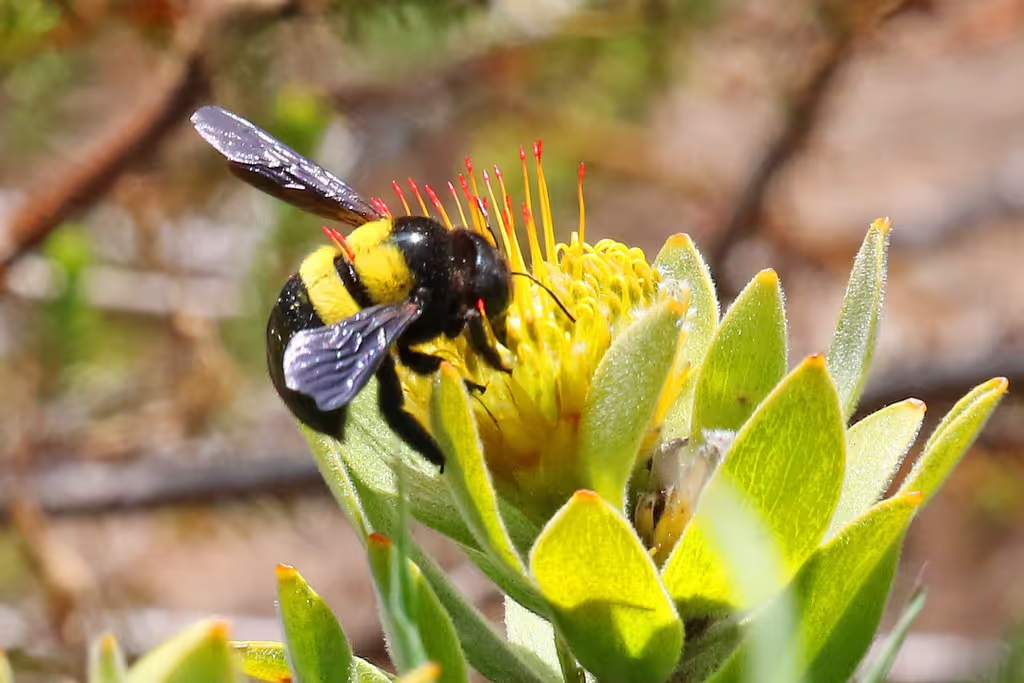
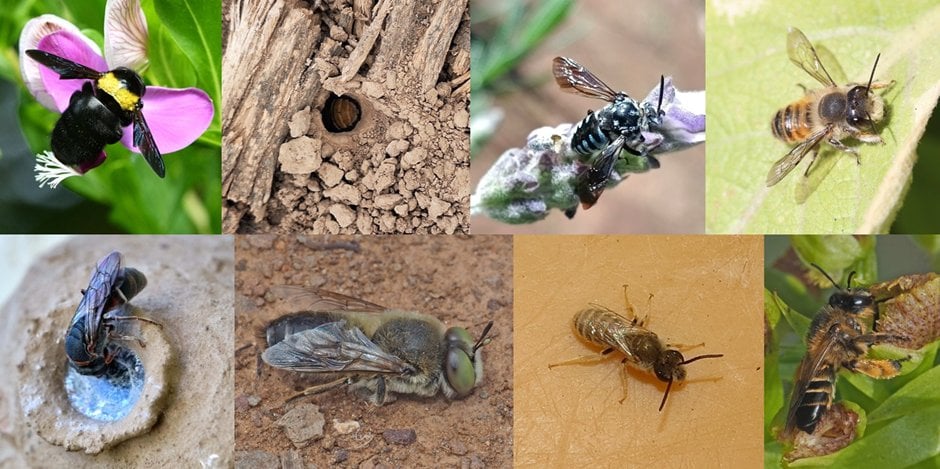
Every year in May, World Bee Day and the International Day for Biological Diversity draw attention to the living systems that keep our planet functioning. At the heart of many of these systems are pollinators, bees, butterflies, birds, and other animals that support both biodiversity and human wellbeing through their interactions with flowering plants. Of all these groups, bees are perhaps the most familiar and, in many cases, the most important pollinators, doing a large share of the work in both natural ecosystems and agriculture. When most people think of bees, they picture large honeybee hives buzzing with thousands of workers producing honey. In South Africa, these are primarily the Cape honey bee (Apis mellifera capensis) and the African honey bee (Apis mellifera scutellata). Yet honeybees represent only a small fraction of bee diversity. More than 1200 bee species have been identified in South Africa, and the vast majority are solitary bees. What are solitary bees? Unlike honeybees, solitary bees do not live in colonies with queens and workers. Instead, each female builds and provisions her own nest, lays her eggs, and leaves the next generation to develop independently. Despite their often small size and overlooked presence, solitary bees are among our most important pollinators. Solitary bees are incredibly diverse. Some nest underground, others in hollow stems or dead wood. Some cut pieces of leaves to line their nests, while others collect floral oils instead of nectar. Broadly speaking, South Africa’s bees can be divided into long-tongued and short-tongued groups, each containing a fascinating variety of species (Figure 1).
Long-tongued Bees (Apidae)
This group includes honeybees, carpenter bees, digger bees, and cuckoo bees. Carpenter bees are among the largest solitary bees in South Africa and excavate tunnels in dead wood where they raise their young. Despite their intimidating size and loud buzzing, they are generally harmless. Digger bees, meanwhile, nest in underground burrows, often recognised by small mounds of soil around the entrance.
Not all bees build nests. Cuckoo bees are brood parasites that lay their eggs in the nests of other bees, leaving the host bee to unknowingly raise their offspring.
Megachilidae
Leafcutter, mason, and resin bees belong to this group. These bees are famous architects, using pieces of leaves, mud, resin, or plant fibres to construct their nests. Unlike most bees, they carry pollen on specialised hairs underneath the abdomen rather than on their hind legs. Leafcutter bees are particularly well known for cutting neat circular pieces from leaves, which they use to line their nesting chambers inside hollow stems or cavities in wood.
Short-tongued Bees (Colletidae)
Often called plasterer or polyester bees, these solitary bees line their nests with a waterproof secretion that dries to form a transparent, cellophane-like membrane, one of the most unusual nesting adaptations in bees.
Andrenidae
Also known as mining or sand bees, these are true ground specialists. Females excavate burrows in sandy or loose soil, where they construct chambers for their developing offspring.
Halictidae
This highly diverse group includes the well-known sweat bees, many of which are metallic green or bronze in colour. Some species are attracted to perspiration for its salts, giving rise to their common name.
Melittidae
One of the most remarkable groups which includes the oil-collecting bees. Instead of gathering nectar, females collect floral oils using specialised hairs on elongated front legs that can sometimes be longer than their bodies. The oils are used to waterproof underground brood chambers. Many of these bees have close relationships with specific indigenous plants and are important pollinators in the Cape Floristic Region.
Creating Spaces for Solitary Bees
Like honeybees and many other pollinators, solitary bees face growing threats from habitat loss, pesticide use, urbanisation, and climate change. Even common gardening practices, such as removing dead wood, paving over bare ground, excessive mulching, or planting only exotic ornamentals, can drastically reduce nesting opportunities and food sources. The good news is that relatively small changes in gardens and urban spaces can make a significant difference.
Ground-nesting Bees
Many solitary bees nest underground in dry, well-drained soil. Thick mulch, paving, frequent tilling, and heavily irrigated lawns can make gardens unsuitable for these species. Simply leaving small patches of exposed soil or undisturbed corners can provide valuable nesting habitat. It is no surprise that ground-nesting bees are sometimes found nesting in neglected plant pots where dry, undisturbed soil conditions persist.
Cavity-nesting Bees and Bee Hotels
Other solitary bees, such as leafcutter and mason bees, nest in hollow stems, cracks in wood, or abandoned beetle burrows. These are the species most likely to use bee hotels. Bee hotels are artificial nesting structures designed to mimic these natural cavities. However, not all bee hotels are equally useful. Effective designs should prioritise function over appearance. Good bee hotels should include: holes between roughly 3–10 mm in diameter with tunnel depths of around 10–15 cm, smooth interiors that will not damage wings, untreated natural materials such as hardwood, bamboo, or reeds, and protection from excessive rain and moisture, and ideally face the morning sun securely mounted about one to two metres above the ground. Large carpenter bees are slightly different because they excavate their own tunnels rather than using pre-made holes. Leaving untreated logs, branches, or dead wood in the garden can help provide habitat for these important pollinators.
Building Pollinator-friendly Gardens
Bee hotels alone are not enough. Solitary bees also require reliable food sources throughout the year, making plant diversity just as important as nesting habitat. Planting indigenous flowering species is one of the best ways to support local pollinators. A diversity of flower shapes, colours, and flowering seasons helps sustain a wider range of species, while reducing pesticide use is equally important. Interestingly, some of the best pollinator habitats come from allowing parts of the garden to remain slightly “wild”. Dead stems, fallen branches, leaf litter, patches of bare soil, and untreated wood can all provide shelter and nesting sites for bees and other beneficial insects. In many ways, pollinator conservation is less about creating perfectly manicured gardens and more about creating living ecosystems. As interest in pollinator-friendly gardening continues to grow, the SBC is also exploring ways to help members support local pollinators more effectively. In the near future, bee hotels designed specifically with solitary bees in mind will be available for purchase.
Article by Chris Broeckhoven (SBC Vice-chair)