.svg)

The Butterflies of Swellendam and How to Attract Them to Your Garden
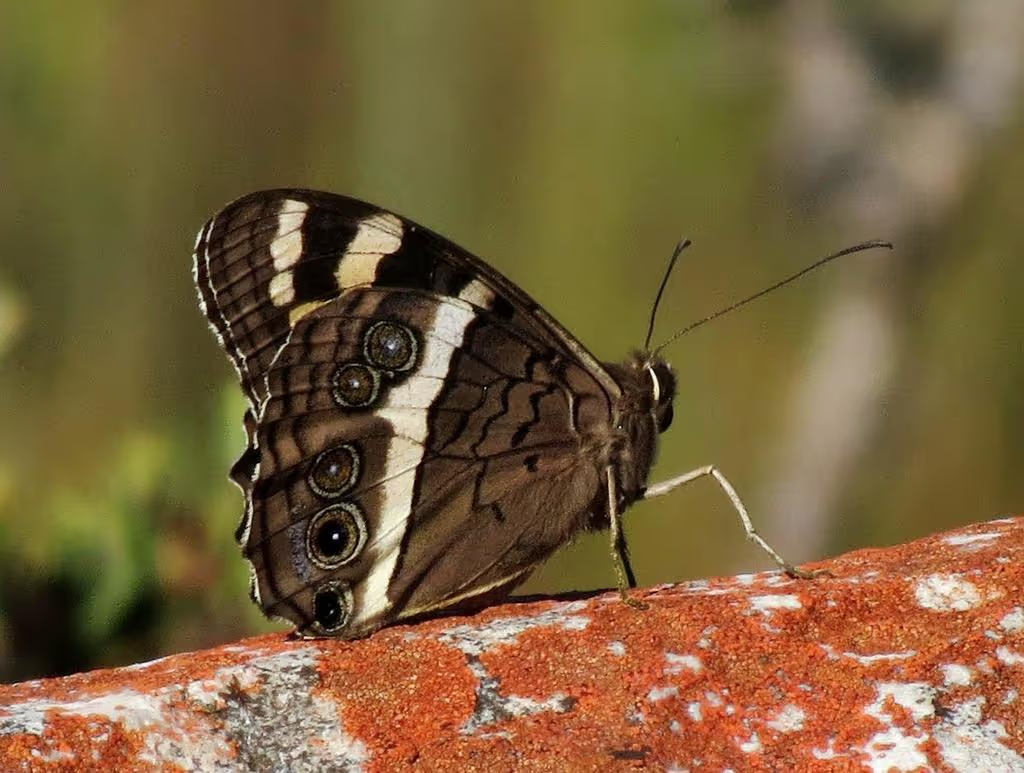
Swellendam has a large wealth of butterflies owing to the diverse vegetation types found in the area, which range from Southern Afrotemperate forest to Fynbos and Renosterveld.
Creating a Fynbos garden is very rewarding for attracting animals, birds and insects, but you will need to pay special attention if you want to attract butterflies. Most of our Fynbos butterflies need host ants, so you need ant nests in your garden. It is not necessary to introduce ants, but by planting the right plants you can encourage them to live in your garden. One such family which you may be able to attract are the Opal (Chrysoritis) butterflies, which depend on Cocktail (Crematogaster) ants for protection. One of the best plants to attract these ants is also a foodplant for Opals, Bush Tick-berry (Osteospermum moniliferum).
Opal larvae excrete a sweet amino acid from their 'honey-gland' which the ants love to imbibe (drink), and in exchange, the ants protect the Opal larvae and pupae in their nests, escorting them at night and providing a protection service whilst they feed on the vegetation.
%20(1080%20x%20300%20px)%20(3).avif)
Proteas are another great plant for your Fynbos garden and can attract the beautiful Protea Scarlet (Capys alpheus alpheus). The butterfly lays single eggs on Protea heads and the larvae spend its life feasting on the bracts. You may also be lucky enough to attract the lovely Table Mountain Beauty (Aeropetes tulbaghia), which has a predisposition to red/orange flowers. Because of this, it is the only pollinator of The Red Disa (Disa uniflora), which would also be a great addition to your fynbos garden. Their larvae feed on grasses, like Shade Erharta (Erharta erecta), so be sure you don't go too crazy weeding out all the grasses.
One more excellent plant to grow, is The Giant Honeyflower (Melianthus major). Not only do the exquisite flowers and seeds attract numerous birds, but the larvae of The Arrowhead Copper (Phasis thero thero) feed on the leaves and pupate in the stems. There is also added protection, as when there are fires, the larvae and pupae are safely underground in the ant nests.
Pelargoniums and Geraniums are a great source of nectar for many butterflies and are fed on by the larvae of The Water Bronze (Cacyreus fracta fracta) and Geranium Bronze (Cacyreus marshalli).
%20(1080%20x%20300%20px)%20(4).avif)
The nearby forest at Grootvadersbos hosts The Green Banded Swallowtail (Papilio nierius layeas). By planting citrus, especially wild Citrus like, Vepris lanceolata, you will be able to bring these attractive butterflies to your garden.
The Forest King Emperor (Charaxes xiphares occidentalis) also occurs in the forest and you may be able to entice it to your garden by planting Cat-Thorn (Scutia myrtina), which its amazing 'viking helmeted' larvae feed on.
%20(1080%20x%20300%20px)%20(5).avif)
Wild Peach Trees are a must for any garden. The Garden Acraea (Acraea horta), will almost definitely seek out your property. The larvae have black spines filled with cyanide, which put most predators off, but you will be surprised to see Diederik Cuckoo and Klaas's Cuckoo in your garden happily feasting on these beasties. Much the same as humans are attracted to the heat of chillies; the Cuckoos are said to like the heat of these caterpillars!
You won't have butterflies in your garden without caterpillars in your garden. You need to have the plants that the caterpillars specifically feed on, to have specific butterflies, and you need plenty of flowers for the adults to draw nectar from.
Enjoy your Swellendam garden! If you want any more info or are interested in joining our butterfly society (Lepsoc Africa), contact Andrew Morton at [email protected].
%20(1080%20x%20300%20px)%20(6).avif)
Article by Andrew Morton