.svg)

"My What Big Ears You Have!" A Little Story on Bat-eared Foxes
If you find yourself in the early morning driving in the Swellendam countryside, especially on the way to De Hoop or Bredasdorp, keep an eye out for those large protruding bits in the landscape. Nope, not the wind turbines, but rather the remarkable ears of the bat-eared fox.
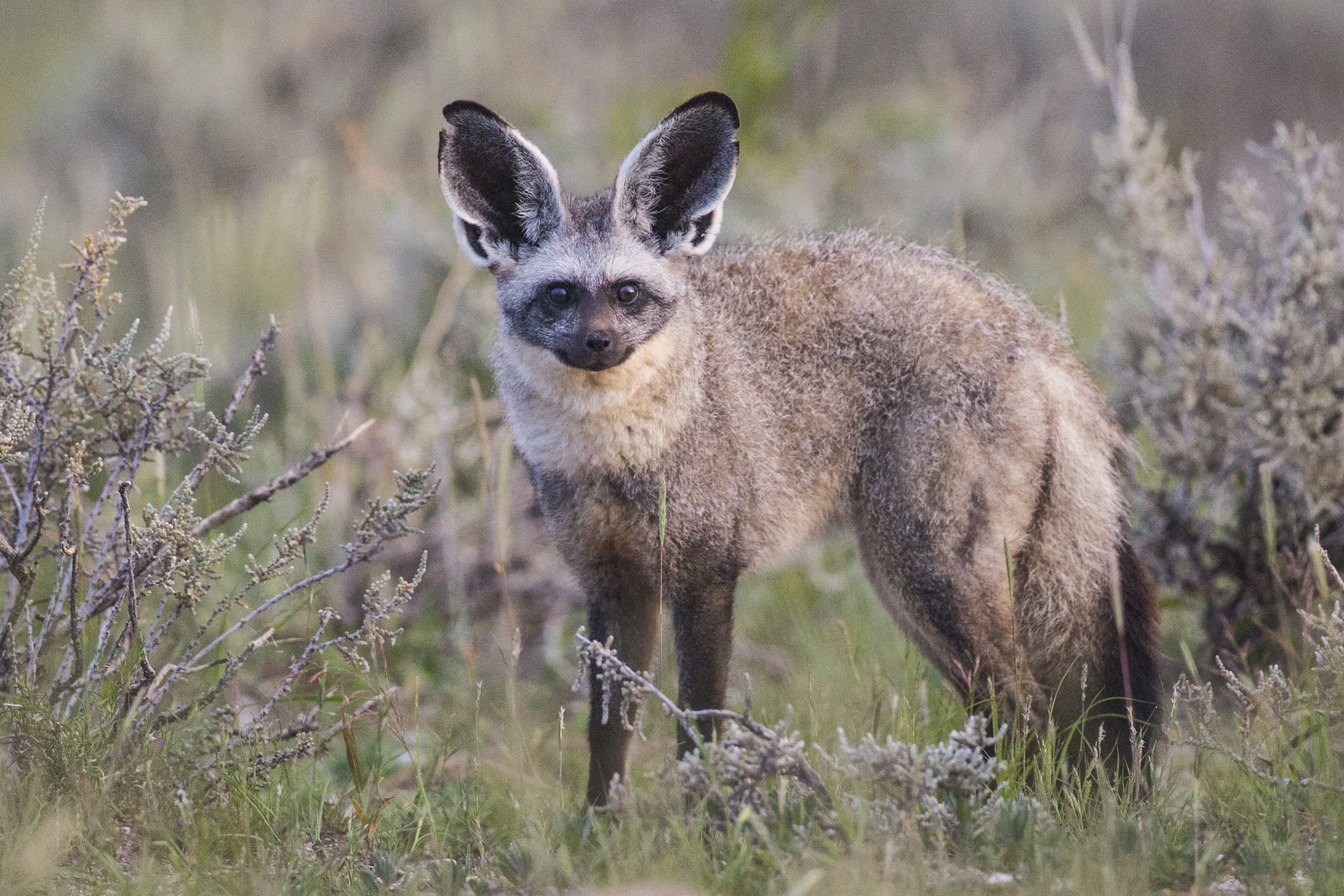
Bat-eared foxes (Otocyon megalotis // Afr. bak-oor jakkals) are very recognizable by those iconic ears; typically at 11-13cm long, they are the largest ears relative to the body for any canid. Consider that a bat-eared fox would typically only be the length of two rulers (~46-66cm), with a bushy tale about half the body length and weighing a very petite 3-5kg!
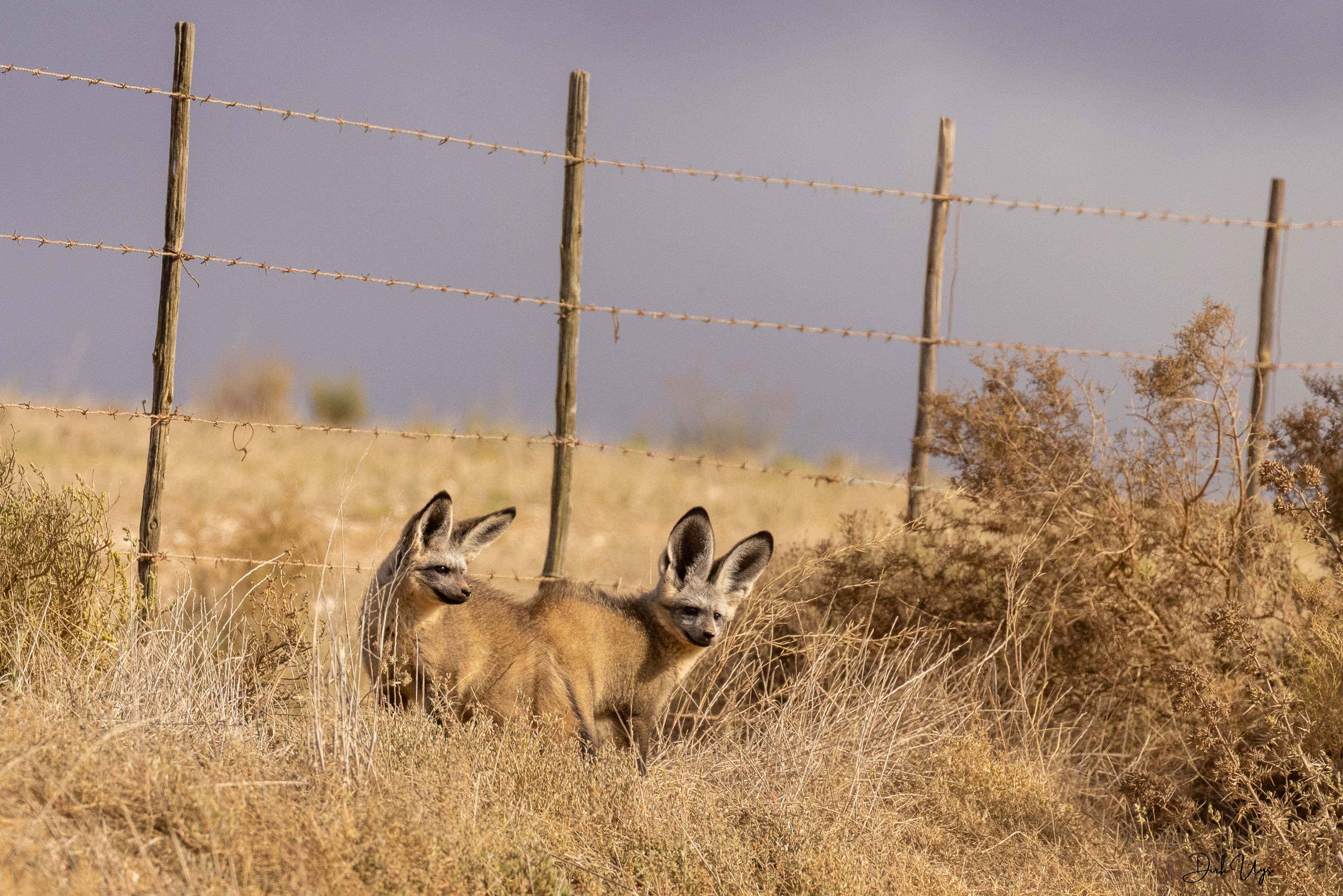
We were fortunate to spot this small family on an early morning outing on the Kluitjieskraal/ De Hoop road. Bat-eared foxes are monogamous, living in small family groups, just like the sighting we enjoyed. They were coming from a field with lots of newborn sheep and looked decidedly up to no good. However, don't let those naughty faces give you a false negative impression - these little creatures are like termite vacuum cleaners, eating up to 1.2 million termites per year! While 80-90% of their diet consists of harvester termites, they will also snack on dung beetles, scorpions, spiders and other insects. Only on rare occasions are they known to eat rodents, birds or eggs, but never on lamb chops!
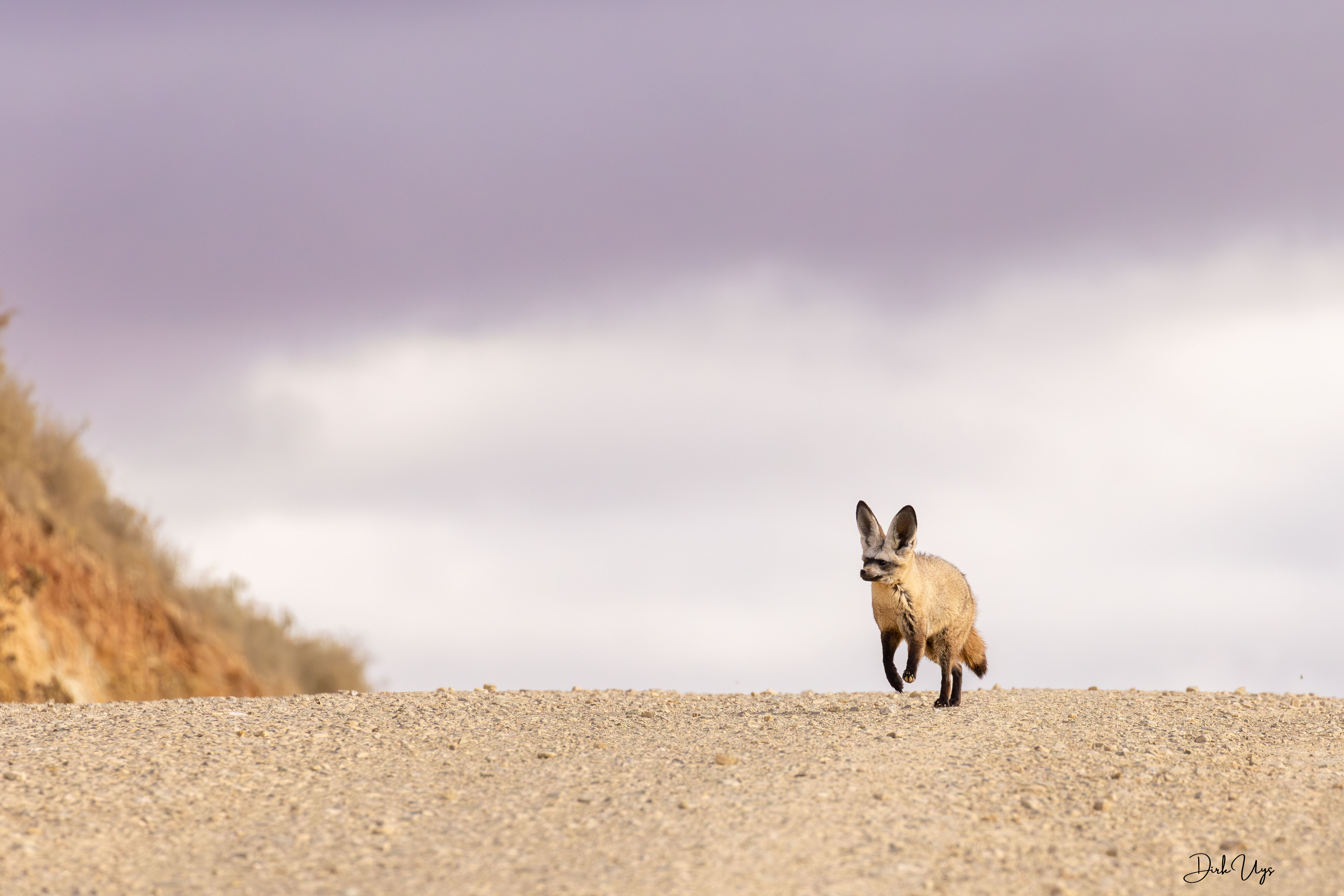
Their ears are truly extraordinary instruments, acting like little satellite dishes, capable of detecting the faintest underground rustling of insects. This helps them play a vital ecological role, by being natural pest controllers, consuming massive numbers of termites and thereby helping the balance of our renosterveld ecosystem. Just imagine the impact on our soil, if termites were left on their own, creating underground tunnels that eventually can cause massive soil erosion during the rainy season. For this important task bat-eared foxes have another unique adaptation; they have more teeth (46-50) than most mammals because they need to crunch through so many tiny exoskeletons!
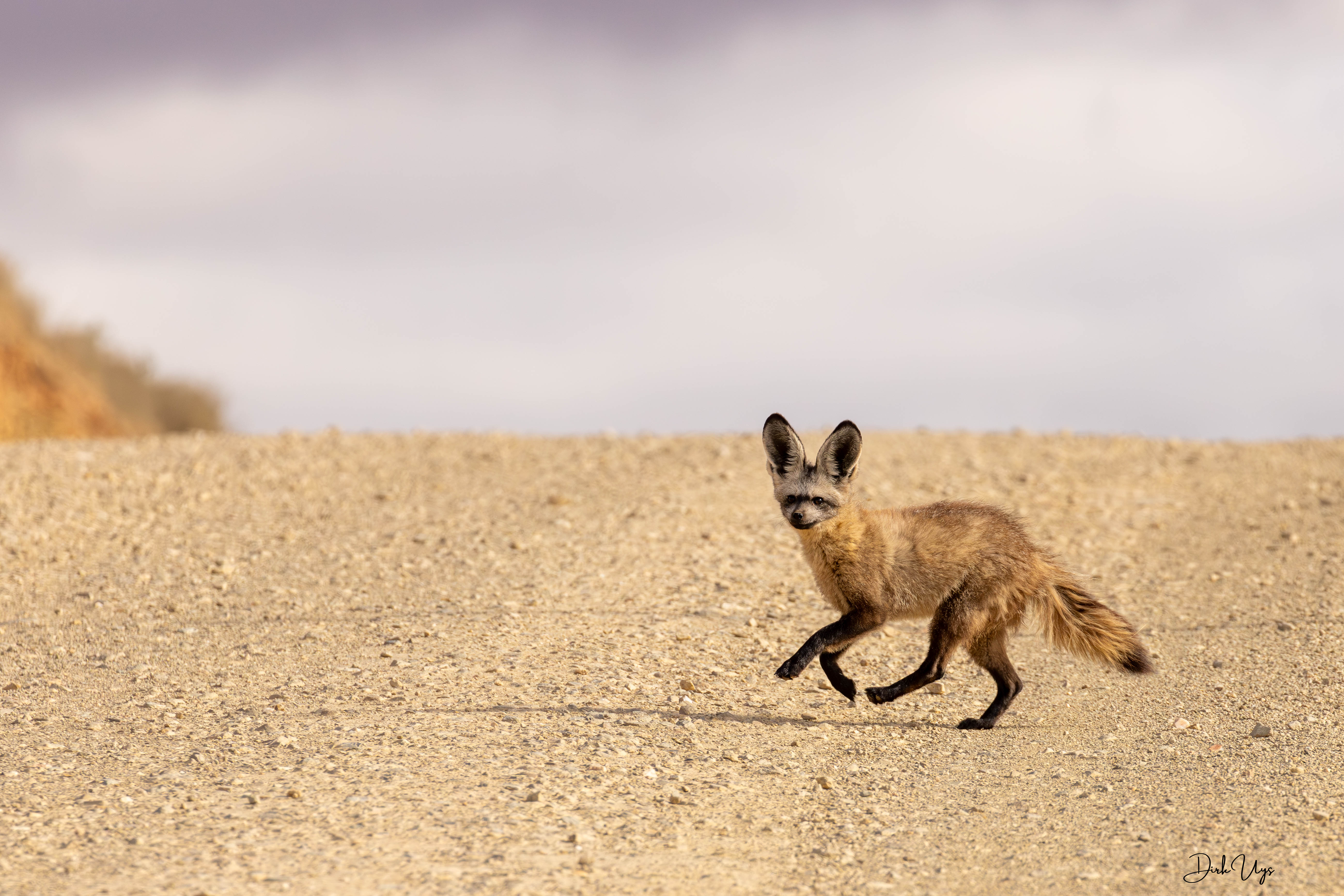
Although the conservation status of these mostly nocturnal animals is fortunately still "Least Concern", protecting these critters remains important for the overall balance of our Overberg ecosystem, especially considering the wild weather patterns we have seen during recent years.
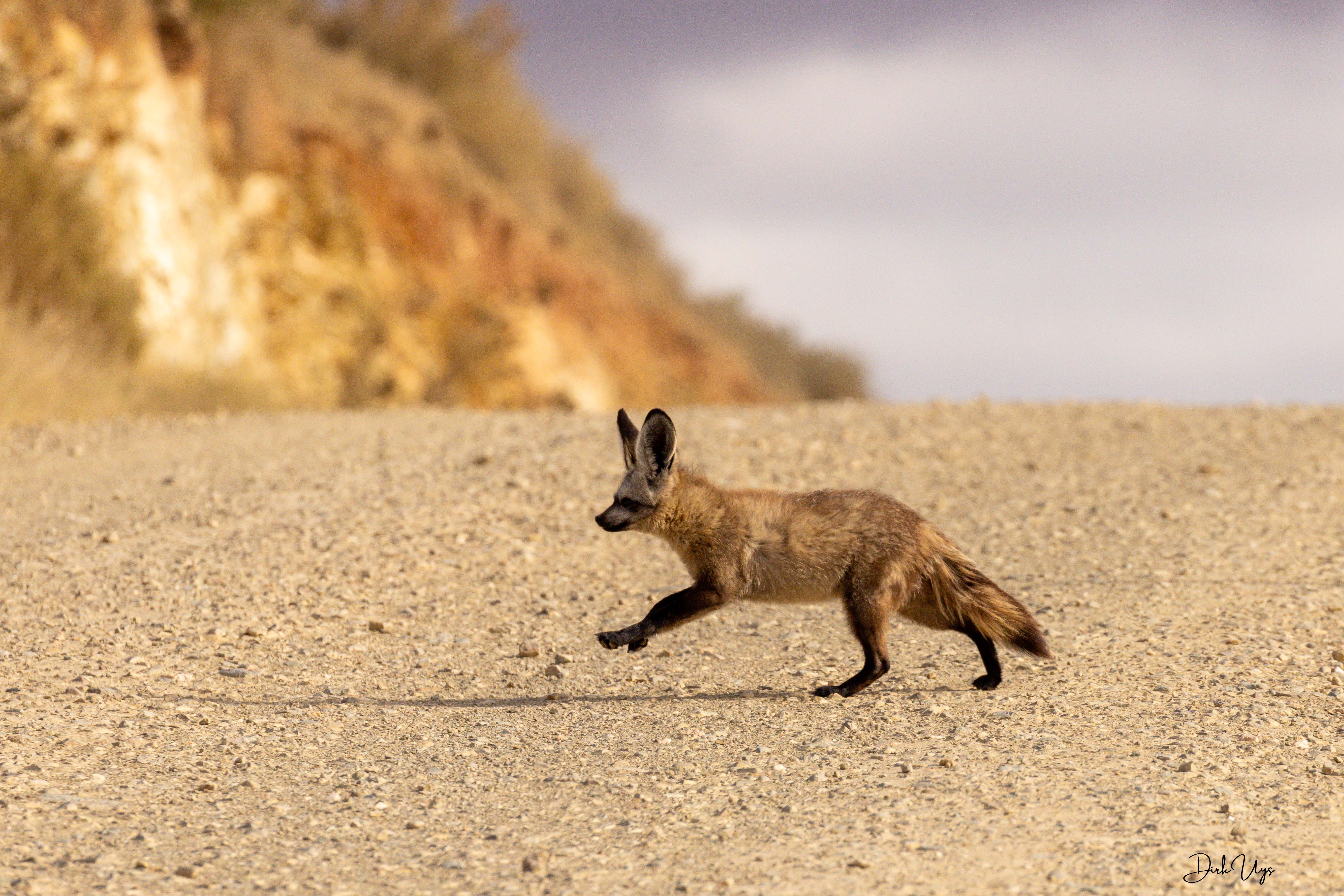
So the next time you're driving our country-roads, be sure to take your time and look out for these cute night-time critters. If it is nice and quiet, you may be forgiven for imagining the voice of Little Red Riding Hood, asking "Oh my, what big ears you have!". But the response will not be a creepy wolf saying "All the better to hear you with", but more likely a cute bat-eared fox saying "All the better for tuning in to Radio Termite".
Article: Dirk Uys
Photos use in article: Dirk Uys
Hero photo: Bat-eared fox — Yathin S Krishnappa (CC BY-SA 3.0), via Wikimedia Commons.