.svg)

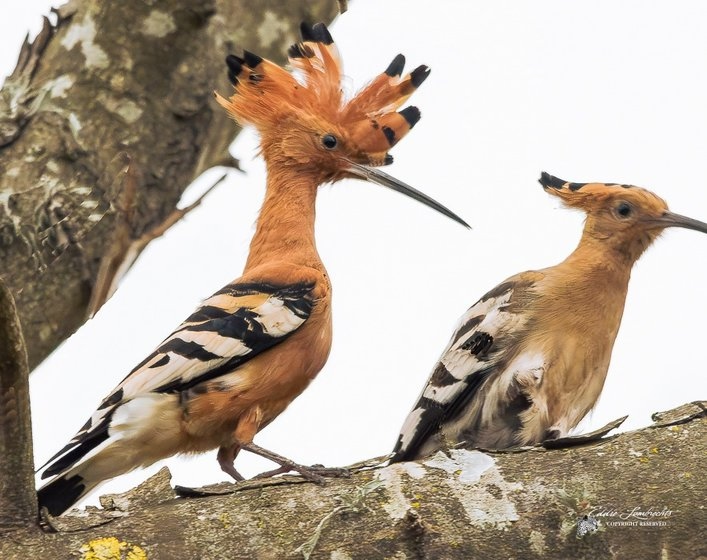
Hoephoep / African Hoopoe
(Upupa africana)
The Tale of the Mistaken "Houtkappertjie"
I grew up knowing this bird species as a "houtkappertjie". Seems that I am not the only one, as many others also got to know it as the "houtkappertjie" initially. It was only when I got interested in birds that I found out that its real name is an African Hoopoe.
I tried to do some research into the name "houtkappertjie" but could not find anything related to the hoopoe.
The fact that it uses its bill to flake or lift bark from trees most probably led to it being called a "houtkappertjie".
The hoopoe is found across large sections of sub-Saharan Africa (African hoopoe), Europe and Asia (Eurasian hoopoe) although these are sometimes grouped as the same species with the Madagascar hoopoe as a separate species.
The body, neck and head is a cinnamon to rufous colour. It has a mostly flattened crest that has black tips. During courtship or battles, the males' crest will raise, also extending its long neck. The back and wings are barred in black and white.
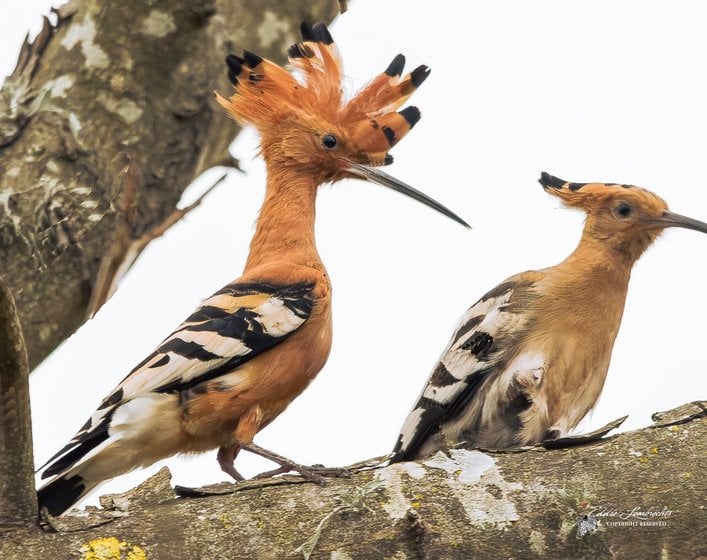
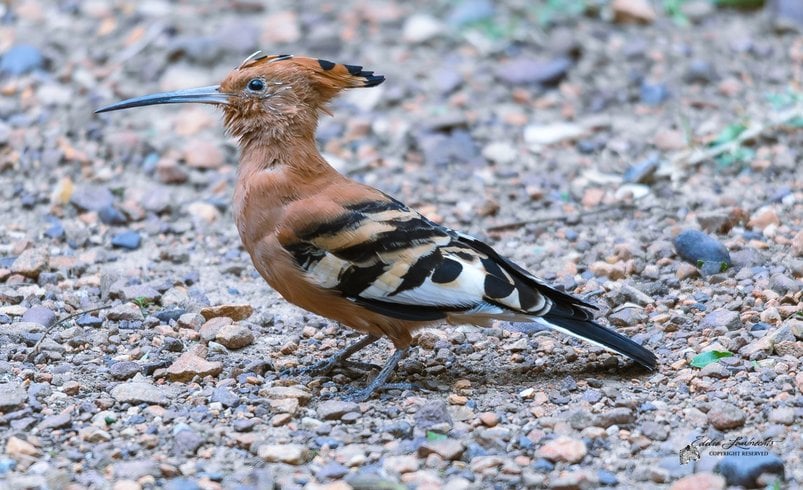
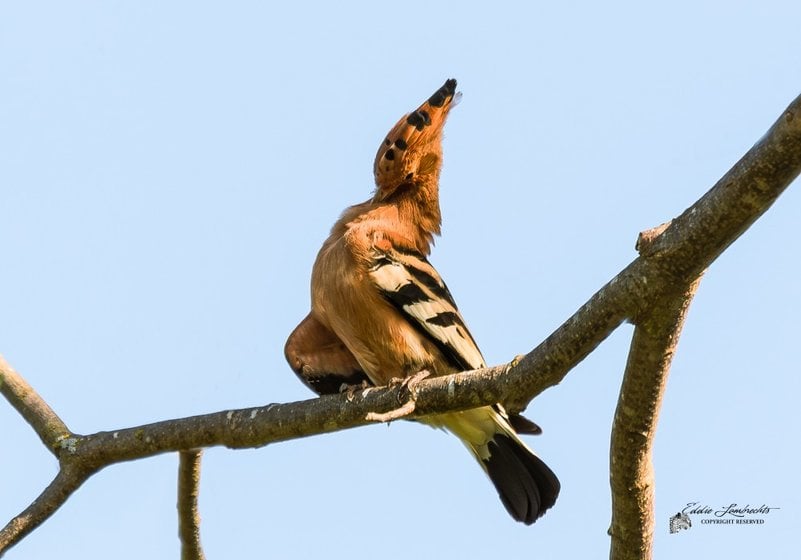
We will most likely find them in our gardens feeding on insects although small reptiles, frogs and plant matter such as seeds and berries are sometimes taken as well. I often find the hoopoes sunbathing on the lawn by spreading out their wings, the tail low against the ground and tilting their head up or backwards. It looks quite comical sometimes.
%20(1080%20x%20300%20px)%20(7).avif)
It appears hoopoes pair for a single breeding season and become quite territorial during this period. Males become quite defensive and brief encounters between them may occur. Courtship entails much chasing of the female by the male, as well as much seemingly aimless dashing about by both sexes independently of one another.
When birds alight close to each other, the male rushes to the female, both raise their bills upwards, almost touching, and quiver drooped wings. The male appears to choose the nesting site.
The nest is in a hole in a tree or wall and has a narrow entrance and may be used several years in succession. It may also reuse old woodpecker or barbet holes. Breeding locally is normally from September thru February.
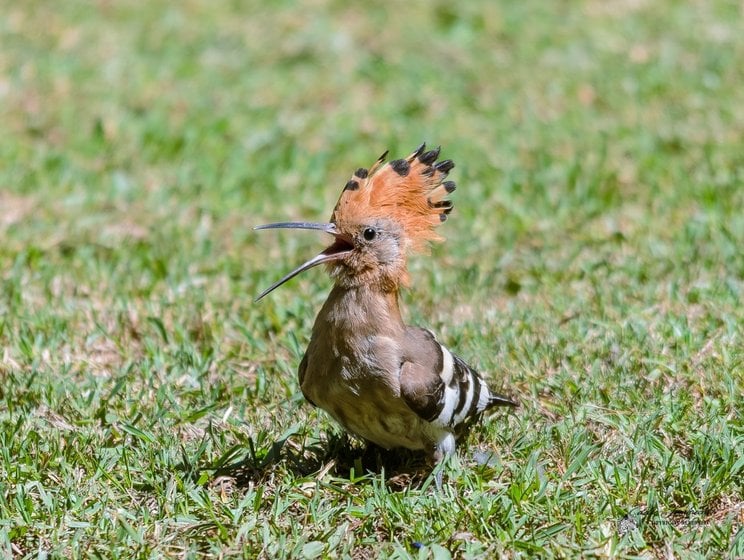
The female remains with the eggs during incubation with the male feeding her. I have not come across a nest myself, but it apparently becomes quite foul-smelling after the young hatch, possibly from preen-gland secretions and faeces of the chicks. Incubation is around 15 to 18 days. The young fledge in 26 to 29 days and may remain with the parents for another week or so.
Article and photos by Eddie Lambrechts