.svg)

From Our Resident African Harrier-hawks
If you found yourself in the area of the tall blue gums on Kanonkop in January, you will be forgiven for thinking you walked into the Bellville taxi rank, considering the amount of whistling going on.
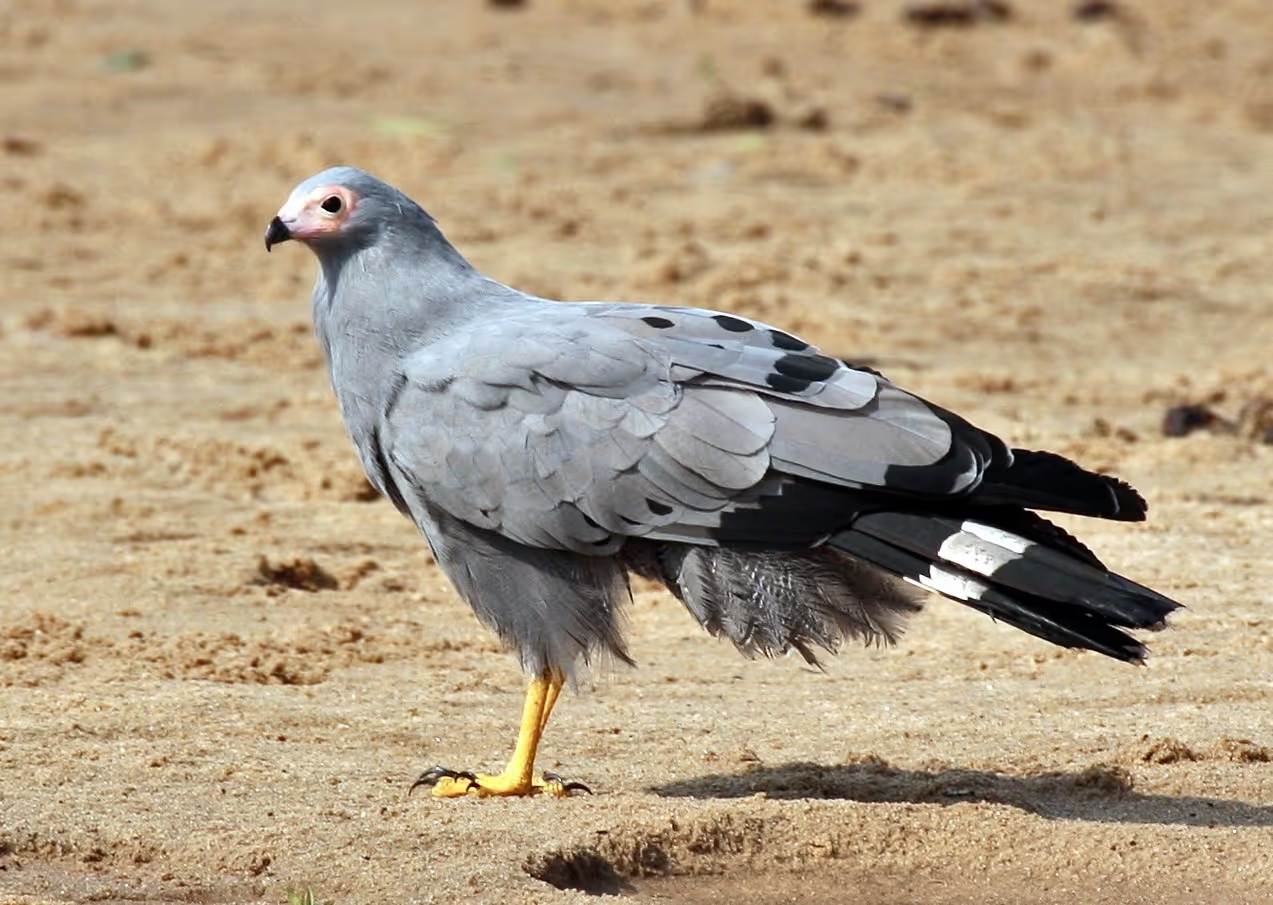
On closer inspection, though, you will find it is a hungry (or more accurately "hangry") young African Harrier-hawk (also known as a Gymnogene), vocalizing and calling for mom and dad to bring some food. This excessive calling will continue, even after the youngster has fully fledged and is able to start flying.
We have been fortunate to witness the journey of these new "Jimmies" over the past few years, as can be seen from the selection of photos below. It all starts with the nest refurbishment (or as we'd like to think, building on a nursery).
This usually takes place around August/ September, when the hardworking parents can be seen carrying branches from the nearby trees to their nesting area high in the bluegums from first light to after sunset.
%20(1080%20x%20300%20px).avif)
Soon after, one can witness Jimmy and Jane enjoying the luxuries of their new abode. The female will lay 1-3 eggs and will take the majority of the nesting responsibility during incubation, which can take 35-36 days. The male will be out hunting and providing food (and the occasional twig for the nest). After hatching, it is apparently common for the older chick to (PG-rated!) "get rid" of the younger siblings. In 2025, we were lucky to see two young harrier-hawks emerge from the nest, but in 2026, we have only seen one fledgling.
.avif)
Once they have hatched, fledglings will stay in the nest for 6-8 weeks. After about a month, they become active, flexing their wings, and about 2-3 weeks later, they will start taking full flights. Earlier this month, we heard lots of whistling/ crying and were amused to see the mom on a nearby street light, with a freshly caught meal in her claws, while the youngster did his best Buzz Lightyear impression ("falling with style"), before struggling to get back to the nest. Later, we saw the mom flying to the nest with the meal, but shortly after flew away again, the meal still firmly in her claws.
Our theory is that this is the tough love part; she is almost teasing the youngster out of the nest and into his first flight. Disclaimer: I somehow doubt leaving a milk bottle or some Purity within crawling distance from the cot would win any Parent of the Year awards, so best not to learn from nature in this case!
%20(1080%20x%20300%20px)%20(2).avif)
Harrier-hawks have double-jointed legs that can bend both forward and backwards. They use this to climb around trees and cliff edges, raiding nests and reaching into tree cavities at seemingly impossible angles. Recently, our local flock (also called a murmuration) of red-winged starlings decided to give one of the parents a pre-emptive warning and mob-attacked the poor raptor. After a few fly-bys, the starlings felt they showed Jimmy who's boss and went off in their usual singing, murmuring way.
Once the young harrier-hawks are actively flying, they don't immediately disappear. They tend to stay around and are somewhat dependent on the parents for another few weeks. During this time, we often see some aerial acrobatics. At first, it seems the parents are teaching them defensive flying, with lots of in-air maneuvering and mock-attacks. Often we would then see the youngster(s) practising on their own, gliding around the one moment before a sudden freefall, talons ready to defend. The youngsters are quick learners, though - last year we spotted one very quickly chasing away a nosy peregrine falcon (unfortunately, as that was a very cool sighting to enjoy).
All of this fun changes in a matter of weeks, as the territorial parents start to be a bit more aggressive in their actions, seemingly indicating to the young one that it is time to leave the comfort of their parental home and head off into the sunset (or just the other side of the Koornlands, for a while at least). T
he gymnogene name literally means "bare-cheeked", so called due to the distinctive yellow facial skin that flushes pink or red when the bird is agitated or excited. In Afrikaans, they are still known as the "Kaalwangvalk".
When we witness the "Flight school" part of the youngster's training, the parents' facial skin will stay yellow, showing they are having fun and not agitated. However, once they are a bit more assertive in telling the young one it is time to go, you can easily see the skin starting to flush and turn a shade of pink.
The juveniles will take up to 3 years to reach adult plumage, so the next time you see a brown raptor drifting about, it may well be young Jimmy or Jane from last year!
Article and photos by Dirk Uys (SBC Member)
.avif)