.svg)

Cape Sugarbirds
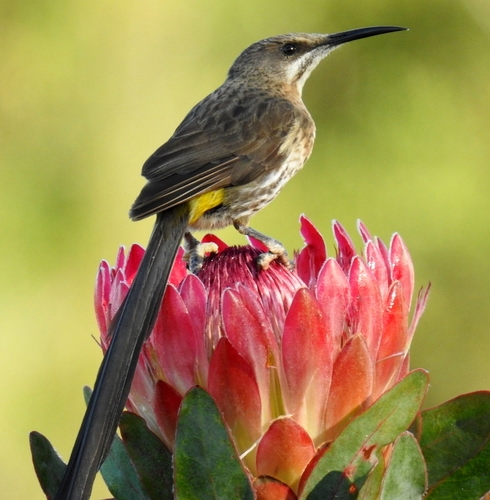
During spring and summer, the Cape Sugarbirds are aplenty in our region as they are mostly found in the mountain fynbos, mostly amongst the proteas. We are fortunate, being so close to the mountain that we often find them as visitors in our gardens.
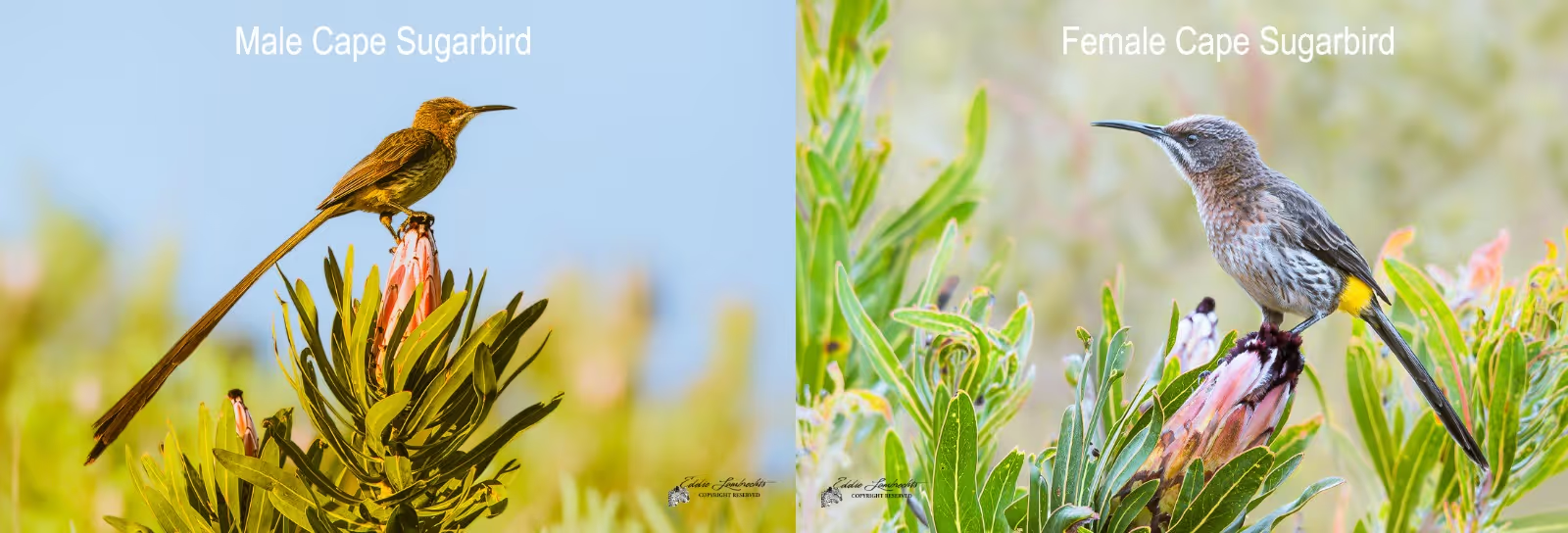
The sexes are alike in plumage; however, males can be distinguished from females by the length of the tail feathers. A female’s tail feathers are about the same length as the body, whereas the male’s tail feathers are distinctly longer, about 2 to 3 times the body length.
During non-breeding months, March to August, they are not very active and may be found in small groups. However, during breeding season, males become aggressive and territorial, defending its territory against other males and sunbirds. They normally breed in the same area each year.
The nest is built by the female only. The female collects a mixture of dead heather, dry grass, and bracken, which are deposited at the nest site, arranged so that the edges of the heap become raised. When enough material is gathered, the female presses her body against the heap of material, lying flat, with neck and tail horizontal and wings slightly spread; she slowly moulds the nest into a cup shape. The Sugarbirds may breed up to 3 clutches per season.
They primarily feed on the nectar of the various protea species and erica species. A bird may visit up to 300 flowers per day to meet their energy requirements. This also makes them excellent pollinators of the proteas. They also feed on invertebrates and kill the prey by slapping it against a branch, moving the head sideways.
Article by: Eddie Lamprecht
Photos by: Eddie Lamprecht
Hero photo: Cape Sugarbird - (c) Colin Ralston – some rights reserved (CC BY-NC)