.svg)

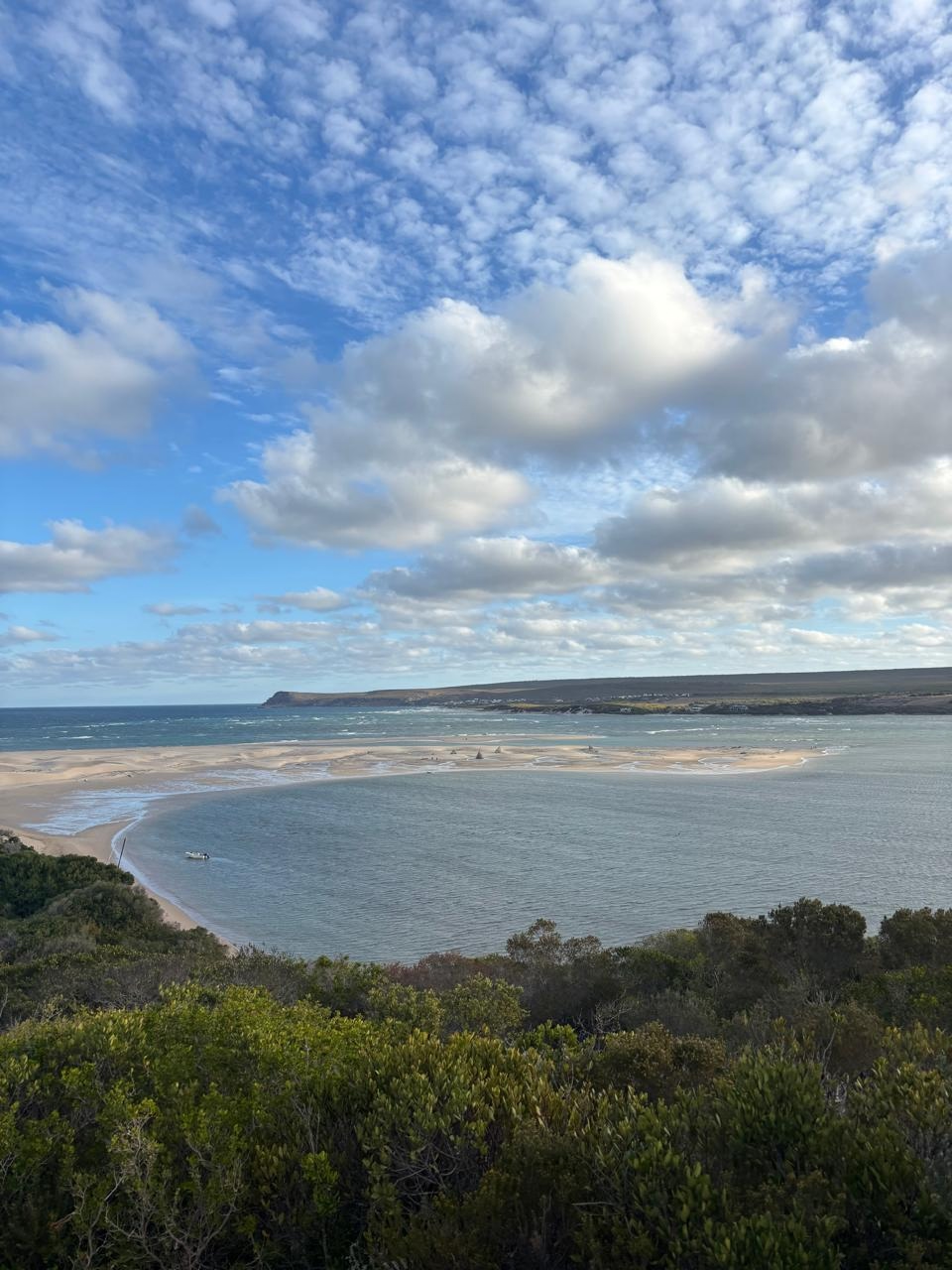
World Oceans day 2026
The importance of river - sea connections
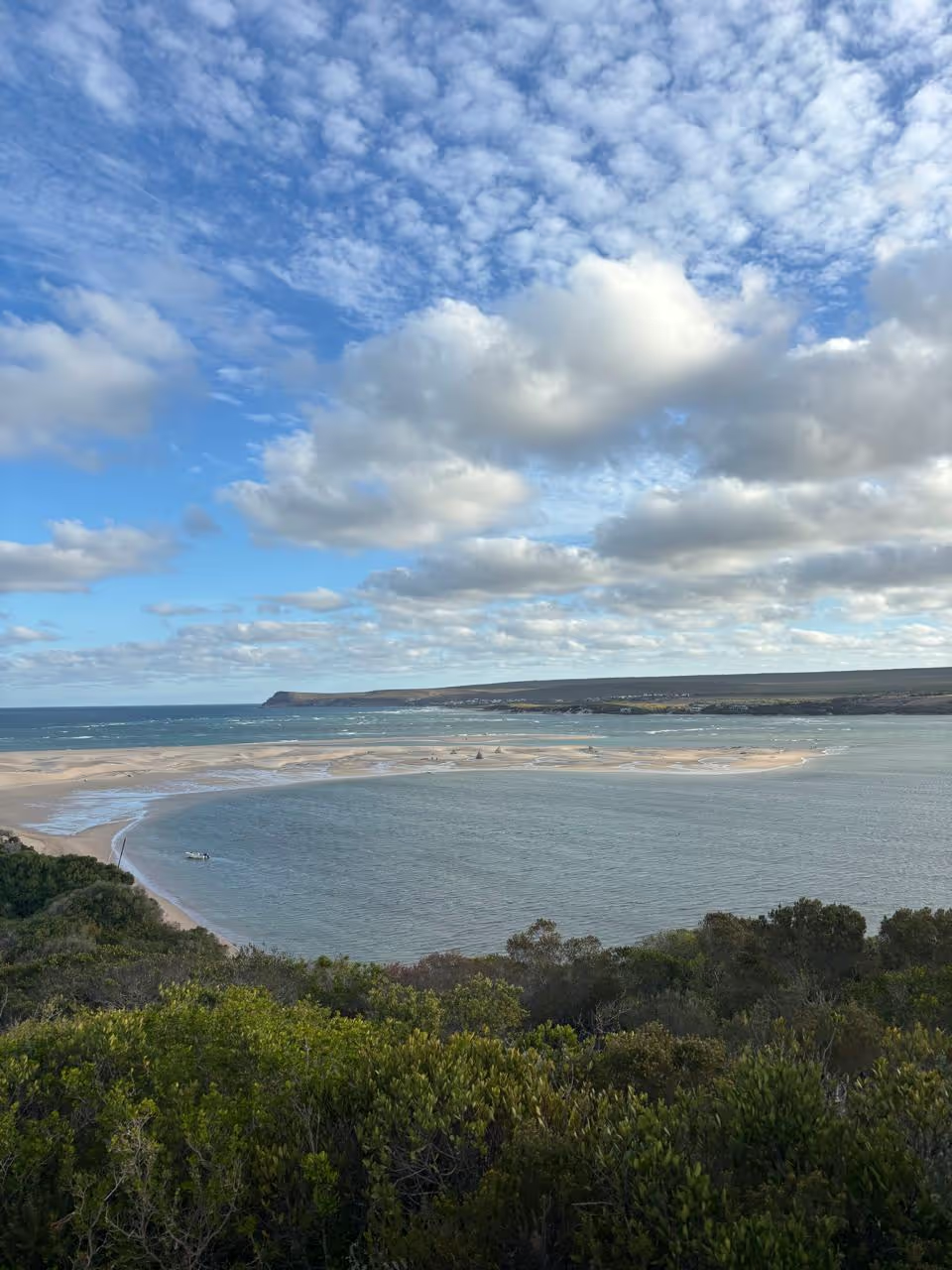
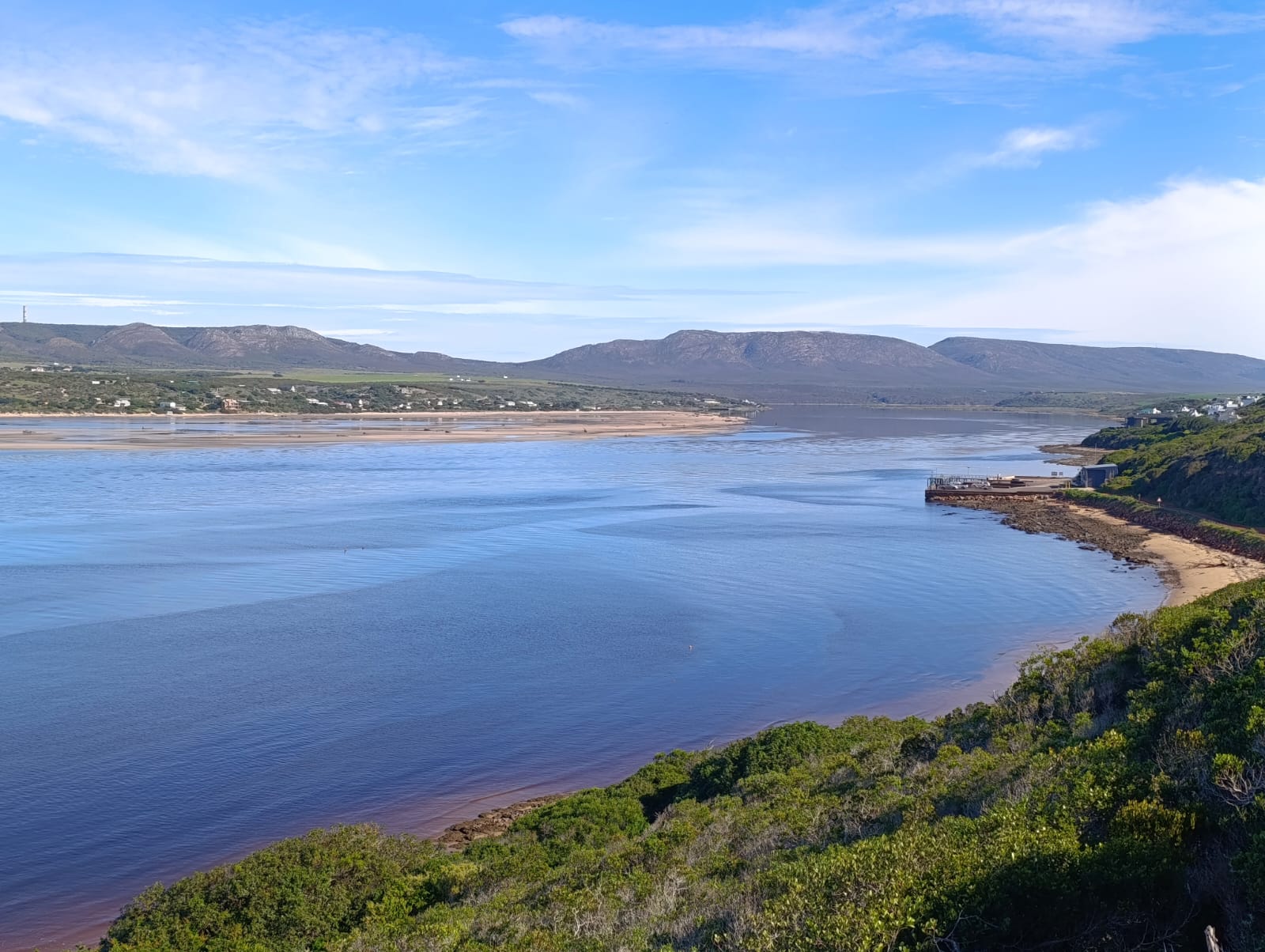
The section of a river where it meets the ocean is called an estuary. An estuary is that portion of a river that is either permanently or periodically open to the sea, is tidal when open to the sea, and in which the water has salinity higher than that of fresh water.
There are 290 estuaries and 42 micro-estuaries along South Africa’s 2798 kilometer mainland coastline. These range from micro-estuaries such as the Bokram (in Kommetjie) to large systems such as the Knysna Estuary.
So why are estuaries so important?
Estuaries are definitely not just places where fresh water is being wasted by running out to sea. They are important ecosystems in their own right, providing a wealth of socio-economic and environmental benefits that extend far beyond their boundaries. These include being vital nursery and feeding grounds, supporting biodiversity, water purification, coastal protection, and a variety of cultural services.
Estuaries are generally sheltered areas with a diversity of habitats making them ideal nurseries for many species. Three key characteristics of estuaries make them ideal nursery/ breeding areas. These are that estuarine waters are generally calm with small waves and gentle currents, they are highly productive systems with plentiful food and the intertidal areas provide the juveniles with protected shallow areas which are less accessible to larger predators. Aside from the benefits for aquatic species, estuaries are also important resting and feeding areas for resident and migrant wading birds.
Habitats found in estuaries include reed beds, submerged vegetation such as seagrass beds, intertidal sandbanks and mud banks, and deeper channels. This diversity is one of the reasons estuaries are one of the most diverse ecosystems in the world.
According to the South African Institute for Aquatic Biodiversity, of the over 170 species of fish that occur in our estuaries, as many as 79 species are dependent on estuaries. Twenty five percent of these, including the endangered Knysna seahorse, are found only in estuaries. A further 21%, such as the dusky kob, spotted grunter, and white steenbras, are dependent on estuaries for at least part of their life cycles. It is also importent to note that many of the species reliant on estuaries are endemic to South Africa.
As water flows down through a catchment to the sea, it collects sediments, nutrients (from agricultural activity and effluent from waste water treatment plants) and a variety of other pollutants. Almost all of these land up in the estuary. The fringing vegetation, microalgae, and sediment layers in estuaries trap pollutants and filter excess nutrients from the water before it flows out to sea. If the estuary becomes degraded, this filtering function may be lost. This may result in the loss of species dependent on the estuary and also may pose a health risk to people using the estuary or beach.
Estuaries act as sediment traps. The sediments transported by rivers tend to be the small grained silts and clays that are transported in suspension. These are usually deposited in areas of an estuary where currents are weaker. Sand is generally brought into an estuary by both rivers, when flows increase after heavy rain storms in the catchment for example, and via the estuary mouth by tidal currents.
The balance between the volume of sediment deposited into an estuary and that exported from the estuary determines whether that estuary silts up and gets shallower or becomes deeper as there is a net loss of sediment from the estuary.
During floods, sediments that have accumulated in an estuary are flushed out to sea. This helps protect the coastline from erosion. Along sandy shorelines this is especially important as they are susceptible to erosion, especially during extreme weather events.
(Click here to view the sediment in the St. Sebastian bay from the Breede River after the May 2026 floods: https://www.facebook.com/share/p/1F9qPu3tNp/ )
Many estuaries are popular tourist destinations catering for a range of activities such as swimming, angling, bird watching, and boating. Estuaries can also serve as ideal venues for ecological research and educational activities. The natural beauty of most estuaries also serves to increase the value of the nearby properties. All of these contribute significantly to local economies.
Despite all these potential benefits a healthy estuary may provide, many estuaries are severely threatened by reduced fresh water inflow, high levels of pollution, and habitat loss. The reduction of freshwater inflow is generally a result of human activities such as water drawn from a river for human consumption, agriculture (irrigation), the construction of dams, or natural variation in rainfall in the catchment. Reduced fresh water inflow may result in changes to the salinity regime in an estuary, low concentrations of dissolved oxygen levels, and decreased in the habitat diversity of the estuary.
Aside from educed fresh water inflow, the timing of variation in fresh water inflow is also an important factor in determining the health of that estuary. Seasonal variation in river flow may provide critical cues to fish dependent on estuaries. For example, increased fresh water inflow would result in a reduction in salinity which could trigger the migration of larval fish from the sea into the estuary. Should the timing of the increased fresh water inflow be altered as a result of water being retained or released from upstream dams, this could disrupt the breeding cycles of species dependent on estuaries.
Seasonal variations in fresh water flows are also critically important in temporary open/closed estuaries. Typically these estuaries are cut off from the sea by the silting up of the mouth when freshwater inflows are low. At the onset of the rainy season, the fresh water inflow increases and the estuary breaches the sandbar, re-establishing a connection to the sea. Some estuarine species are reliant on this cycle.
So estuaries are not just a place where river water is wasted as it flows out to sea! It can also be seen that estuaries cannot be managed in isolation. Catchments, wetlands, estuaries, and nearshore marine zones need to be treated as one interlinked system in order to realise their full potential.
Article by: Kevin Weerts
Follow SBC for more conservation news and updates:


.png)